Switching to solar energy is an excellent way to reduce your electricity costs and minimize your environmental footprint. However, before you install a solar power system, it’s essential to understand how to calculate your solar power needs accurately. This guide will walk you through the key factors to consider when determining the size of your solar PV system, helping you make informed decisions that maximize efficiency and cost savings.
Why It’s Important to Calculate Solar Power Needs
Accurately calculating your solar power needs ensures that you invest in a system that generates sufficient energy for your home or business. If your system is too small, you may still rely on the grid, limiting your savings. On the other hand, an oversized system can result in unnecessary upfront costs. Proper calculation helps you strike the perfect balance.
Key Factors in Calculating Your Solar Power Needs
1. Understand Your Energy Consumption The first step in determining your solar power needs is to understand your current energy consumption. This can be done by reviewing your electricity bills to determine your average monthly and yearly energy usage, typically measured in kilowatt-hours (kWh).
How to Find Your Energy Usage: Your utility bill will provide information on your energy consumption. Look for the total kWh used over a one-month period, and multiply this by 12 to get your annual usage. For example, if your household uses 900 kWh per month, your annual usage would be 10,800 kWh.
Consider Future Energy Needs: If you plan to add energy-intensive appliances (like electric vehicles or heating systems) or expect your usage to change, factor in these adjustments to ensure your system meets future needs.
2. Determine Peak Sunlight Hours Solar panels rely on sunlight to generate electricity, so the amount of solar energy your system produces depends on how much sunlight your location receives. This is typically measured in peak sunlight hours, which is the number of hours per day your solar panels receive optimal sunlight.
Average Peak Sunlight Hours: The number of peak sunlight hours varies depending on geographic location and weather conditions. For example, areas closer to the equator receive more sunlight than northern regions. In general, locations in the U.S. receive between 3-5 peak sunlight hours per day.
How to Find Your Peak Sunlight Hours: Use online solar calculators or consult local data to estimate the number of peak sunlight hours in your area. The more sunlight your region receives, the fewer panels you’ll need to generate sufficient electricity.
3. Estimate the System Size Once you know your annual energy consumption and peak sunlight hours, you can estimate the size of the solar power system required. Solar system size is measured in kilowatts (kW), and the formula to estimate your system size is:
{System Size (kW)} = {{Annual Energy Usage (kWh)}}{{Annual Peak Sunlight Hours} \times 365}
For example, if your household uses 10,800 kWh per year and your location receives 4 hours of peak sunlight per day, the formula would be:
{10,800{ kWh}}{4 { hours} \times 365} = 7.4 { kW}
This means you would need a solar system with a capacity of around 7.4 kW to meet your energy needs.
4. Factor in Solar Panel Efficiency Solar panels vary in efficiency, which refers to how much sunlight they can convert into usable electricity. Most solar panels have an efficiency rating between 15-22%, with higher efficiency panels producing more electricity in a smaller space.
Panel Efficiency: If space is limited, you might need higher-efficiency panels to generate the required amount of electricity. For example, premium panels can produce more energy in less space, which is ideal for rooftops with limited room for installations.
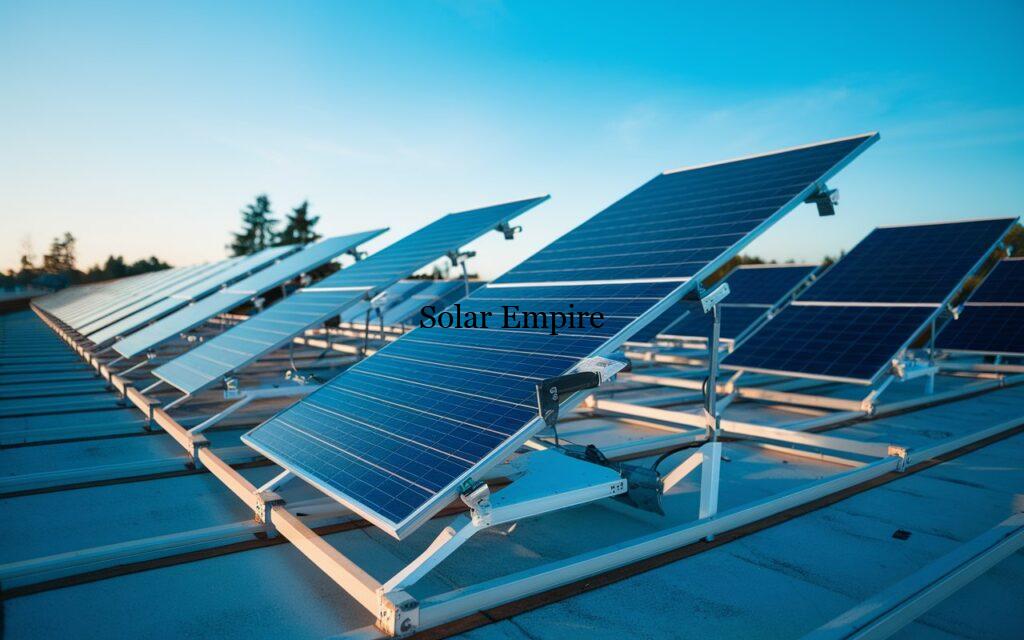
Panel Wattage: Solar panels are rated based on the number of watts they can produce. The average solar panel typically produces between 250 to 400 watts per panel. Multiply the wattage by the number of peak sunlight hours to determine how much electricity your panels will generate daily.
Example:
{Daily Energy Production (kWh)} = {\text{Panel Wattage} \times {Peak Sunlight Hours}}{1,000}
5. Consider System Losses No solar power system is 100% efficient. Various factors such as inverter efficiency, wiring losses, shading, and panel soiling can reduce the overall output of your system by 10-20%. To account for these losses, it’s important to factor in a loss coefficient when estimating your system size.
Inverter Efficiency: Inverters typically operate at 95-98% efficiency, meaning a small portion of the energy is lost during the DC-to-AC conversion process.
Other Losses: Shading from trees, dust on panels, and extreme temperatures can also impact performance. To compensate for these losses, increase your estimated system size by 10-20%.
Adjusted formula:
{Adjusted System Size (kW)} = {{System Size (kW)}}{1 – {Loss Percentage}}
{7.4}{1 – 0.15} = 8.7 { kW}
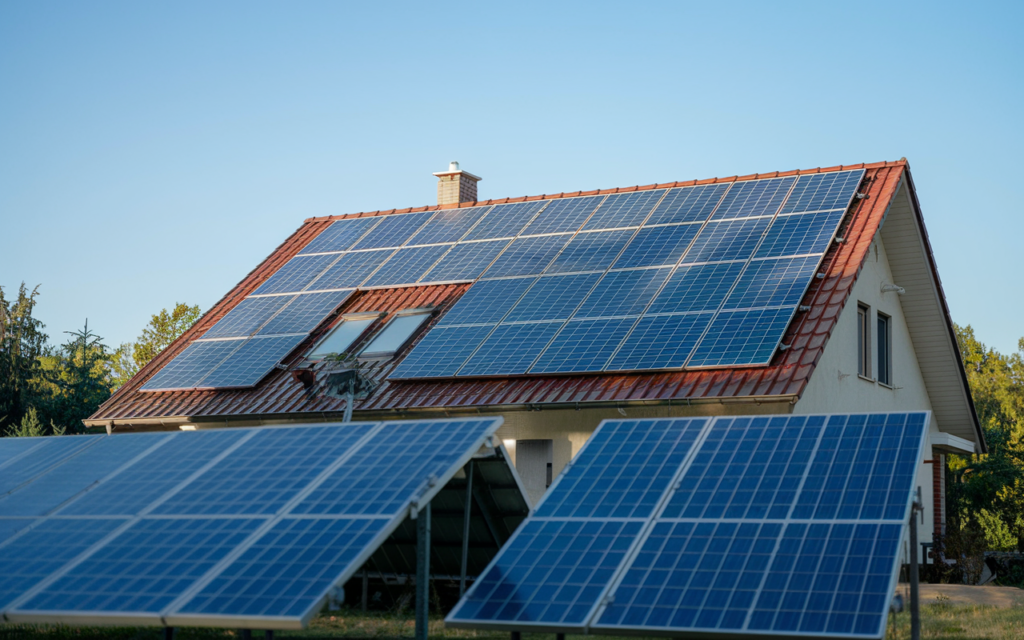
6. Roof Space and Orientation Solar panels require sufficient roof space for installation. Each panel takes up a certain amount of space, usually between 15-20 square feet. For a typical 7-10 kW system, you’ll need roughly 350-500 square feet of roof space.
Orientation and Tilt: South-facing roofs are ideal for maximizing sunlight exposure, though east and west orientations can also work with slightly reduced efficiency. Your solar installer will assess the angle and tilt of your roof to optimize energy production.
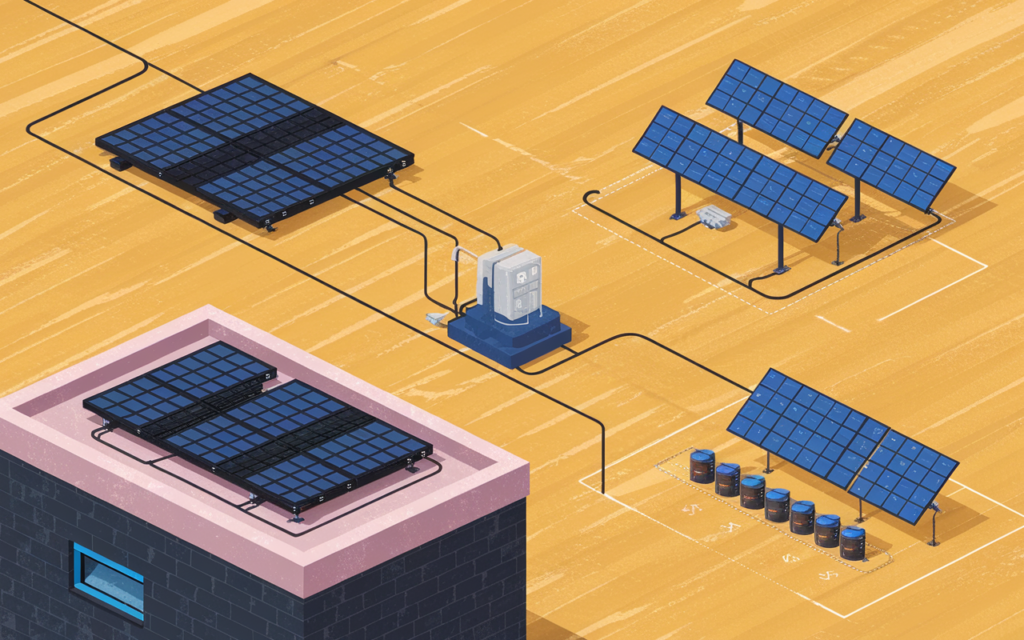
7. Decide Between Grid-Tied and Off-Grid Systems Another factor that influences your system size is whether you choose a grid-tied or off-grid solar system.
Grid-Tied: In a grid-tied system, you remain connected to the electrical grid. This means you can use solar power during the day and rely on the grid during cloudy days or at night. These systems often include net metering, where excess solar power is fed back into the grid, and you receive credits.
Off-Grid: In an off-grid system, you are entirely independent of the grid. Off-grid systems require battery storage to store excess solar energy for use when the sun isn’t shining. These systems generally require larger setups to meet energy demands year-round.
Conclusion
Calculating your solar power needs involves understanding your energy usage, sunlight availability, panel efficiency, and potential system losses. By following these steps, you can estimate the ideal solar system size to meet your energy needs, whether you’re installing solar panels for your home or business.
At Solar Empire West Africa Ltd, we specialize in designing and installing customized solar power systems tailored to your specific needs. Contact us today for a free consultation and let us help you make the switch to clean, renewable solar energy.